Most businesses do not wake up one day and decide their network needs an upgrade. Instead, the signs build gradually, often dismissed as minor annoyances or blamed on unrelated causes. An employee complains that the system feels slower than usual. A video call with headquarters drops unexpectedly. A new device cannot connect properly to the office network. Individually, these incidents seem small enough to ignore. Together, they tell a different story, one that points to infrastructure quietly falling behind the needs of the business.
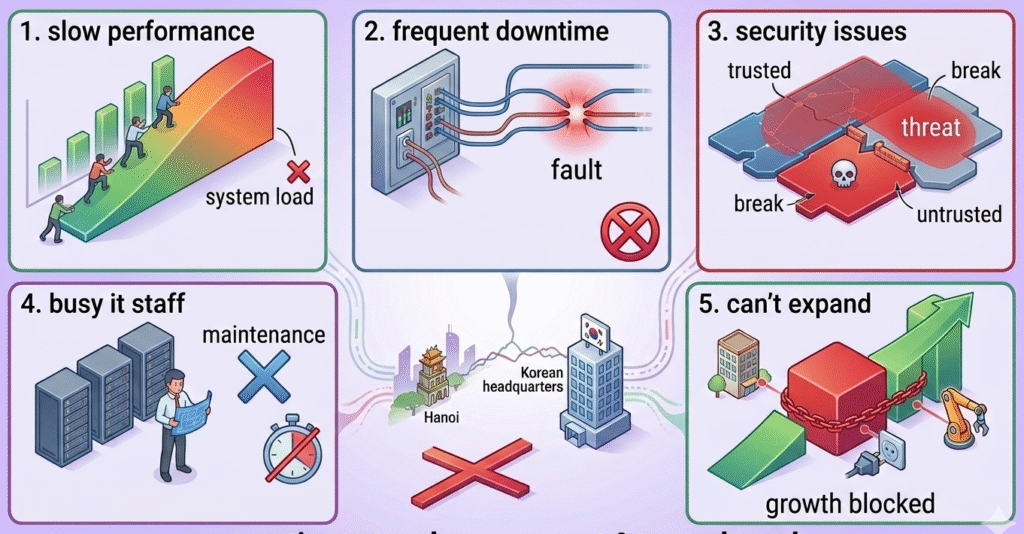
For foreign invested enterprises operating in Vietnam, particularly Korean companies coordinating closely with headquarters and managing growing local operations, recognizing these warning signs early can prevent much larger disruptions later. Below are five signs that typically indicate a network upgrade is no longer something to plan for someday, but something that needs attention now.
- Performance Slows Down as the Business Grows
One of the clearest signs of an aging or undersized network is performance that degrades as the company adds more employees, devices, or applications. A network that worked fine for fifty employees may begin struggling once headcount reaches one hundred, even if no major changes were made to the underlying infrastructure. This happens because the original design was built around a much smaller load, and the system simply was not engineered to scale beyond it.
This kind of slowdown often shows up first in everyday tasks that used to feel instant. File transfers take noticeably longer. Cloud based applications lag during peak hours. Video calls, especially those connecting to offices overseas, become choppy or freeze entirely. At first these issues might be attributed to internet service providers or to specific software platforms, but if the pattern continues and worsens over time, the underlying network itself is usually the real bottleneck.
Growing businesses need infrastructure that can expand alongside them. When performance issues become a regular topic of complaint among employees rather than an occasional inconvenience, it is a strong signal that the network has outgrown its original design.
- Frequent Downtime or Unexplained Outages
Occasional technical issues are a normal part of running any IT system. However, when outages start happening with increasing frequency, or when the causes behind them remain unclear even after investigation, this points to a structural problem rather than a temporary glitch.
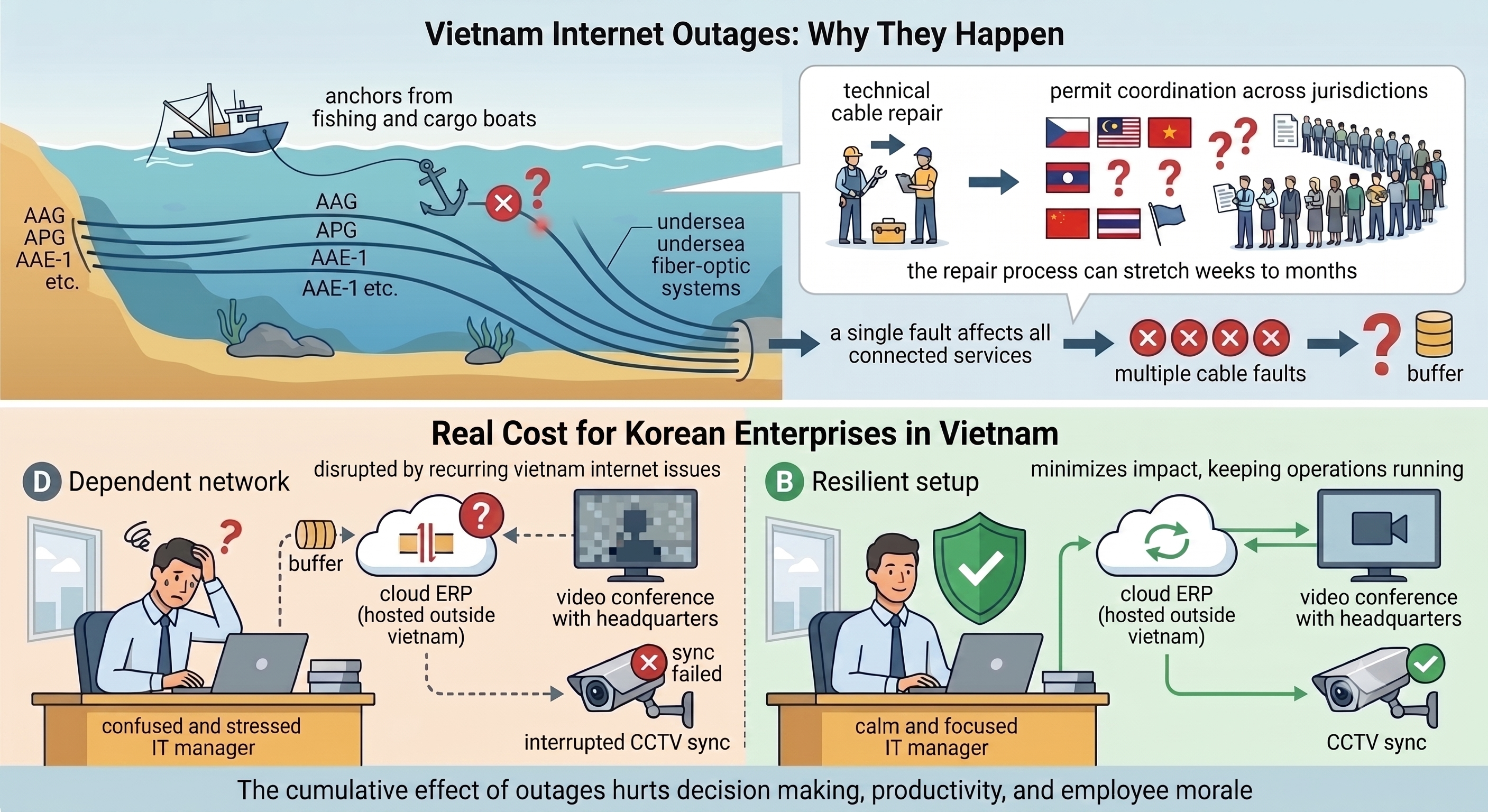
Frequent downtime often stems from networks that lack proper redundancy. If a business relies on a single point of failure, such as one internet line or one core switch, any disruption to that single component can take down connectivity for an entire office or facility. As companies grow and add more critical systems that depend on constant connectivity, the cost of this kind of fragile setup increases significantly.
Unexplained outages are particularly concerning because they suggest the IT team does not have full visibility into what is happening across the network. Without proper monitoring tools and documentation, troubleshooting becomes a process of trial and error rather than a clear diagnosis. This is often a sign that the network has grown more complex over time without the management systems needed to keep up with that complexity. For companies where downtime affects production schedules, client communication, or coordination with overseas headquarters, this risk becomes even more serious.
- Security Incidents or Near Misses Are Becoming More Common
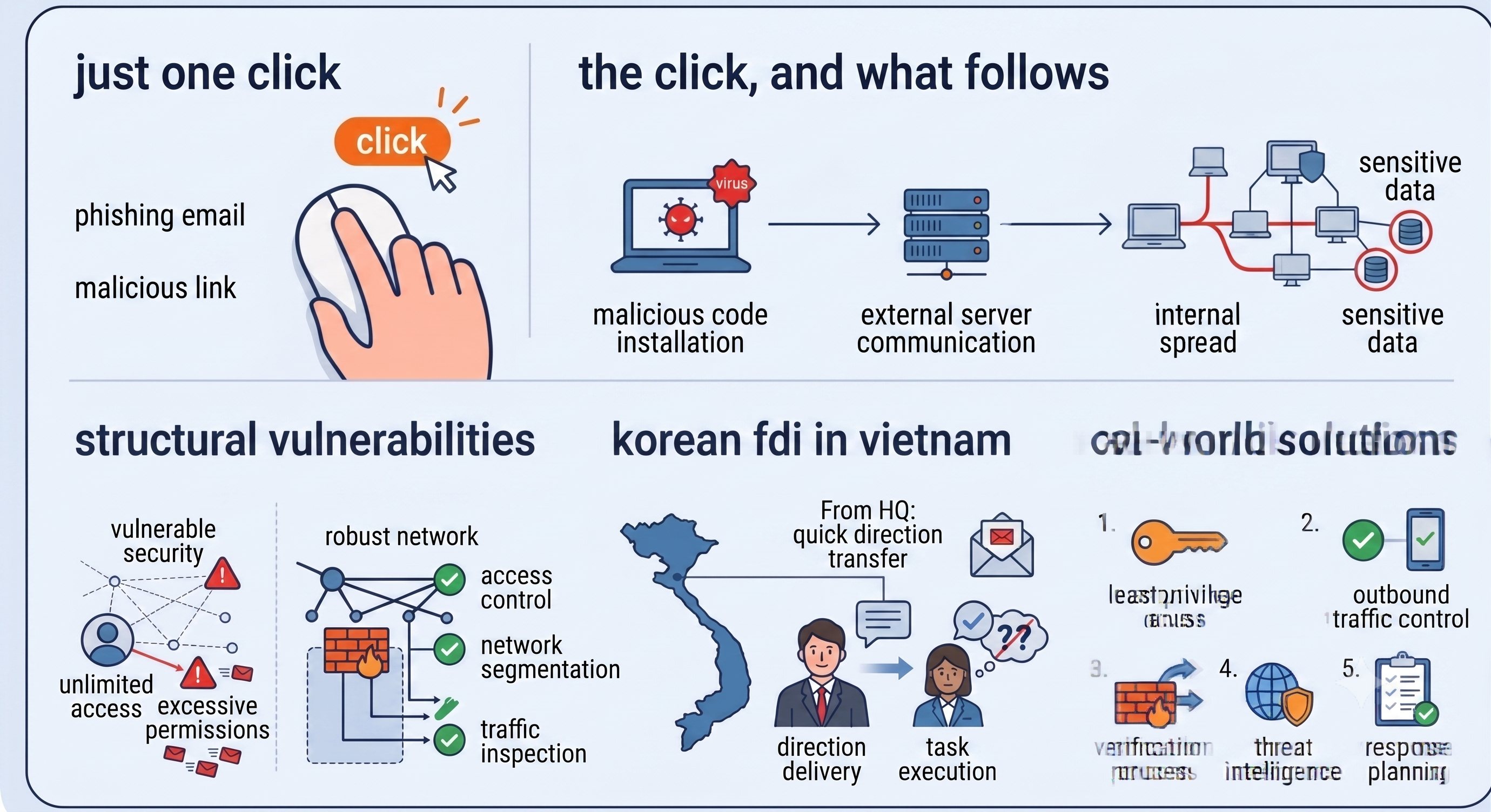
Security concerns are rarely just about the strength of antivirus software or firewall rules. Often, they point back to weaknesses in the network’s underlying architecture. If a company has experienced an increase in suspicious activity, phishing attempts that succeed in reaching internal systems, or unauthorized access attempts that are only caught after the fact, the network itself may lack the segmentation and monitoring needed to contain these risks effectively.
A well designed network separates different parts of the business so that a security issue in one area does not easily spread to others. Without this kind of segmentation, a single compromised device, such as an employee’s laptop affected by malware, can potentially expose sensitive systems across the entire organization. For Korean enterprises handling proprietary manufacturing data, financial records, or client information, this vulnerability is especially serious given the value of the data involved and the regulatory expectations that often come from headquarters.
When security incidents start happening more often, or when near misses reveal that the company narrowly avoided a more serious breach, this is rarely just bad luck. It usually reflects gaps in the network’s design that need to be addressed at the infrastructure level, not just through additional software tools layered on top of an already weak foundation.
- IT Staff Spend More Time Fixing Problems Than Improving Systems
A useful but often overlooked indicator of network health is how the IT team actually spends its time. In a well functioning environment, IT staff are able to dedicate a meaningful portion of their work to improving systems, planning for future needs, and supporting business initiatives. When a network is struggling, this balance shifts dramatically toward reactive firefighting.
If IT staff find themselves constantly responding to connectivity complaints, manually troubleshooting recurring issues, or patching the same problems repeatedly without ever fully resolving them, this is a sign that the underlying infrastructure is creating more work than necessary. This pattern is not only frustrating for the IT team, it also represents a real cost to the business. Time spent firefighting is time not spent on strategic improvements that could actually move the company forward.
This warning sign is sometimes harder for leadership to notice because it happens behind the scenes. Business leaders may simply assume IT is busy without questioning why. But if conversations with the IT department consistently revolve around the same recurring issues rather than new projects or improvements, it is worth asking whether the network itself is the root cause.
- The Network Cannot Support New Business Initiatives
Perhaps the most telling warning sign is when the network actively limits what the business can do. This might look like an inability to quickly set up a new office location, difficulty integrating a new software platform that the company wants to adopt, or challenges supporting an increase in remote work arrangements that employees have come to expect.
For companies operating in Vietnam, this often becomes apparent when trying to scale production, open additional branches, or deepen integration with global headquarters systems. If implementing these initiatives requires significant struggle, unexpected costs, or extended timelines specifically because the existing network cannot support them, this is a clear sign that infrastructure planning has fallen behind business strategy.
In a competitive market, the ability to move quickly on new opportunities is a genuine advantage. A network that holds the business back, rather than enabling its plans, has effectively become a liability rather than a tool for growth.
Recognizing the Signs Before They Become Costly
These five warning signs rarely appear all at once, and that is part of what makes them easy to overlook. They tend to accumulate gradually, with each individual issue seeming manageable on its own. However, when several of these signs start appearing together, it usually means the network has reached a point where reactive fixes are no longer sufficient. What the business actually needs is a proper assessment and, in many cases, a planned upgrade designed around current and future needs rather than the conditions that existed when the network was first built.
For Korean enterprises and other foreign invested companies operating in Vietnam, this kind of proactive attention to network infrastructure is particularly valuable. Operations here often need to support close coordination with overseas headquarters, rapid local growth, and increasingly complex security requirements, all at the same time. A network that cannot keep pace with these demands creates risk that extends well beyond simple inconvenience.
At Beyondnet, helping clients recognize these warning signs early is a core part of how network assessments are approached. As an FDI Korean IT company with extensive experience supporting international and Korean enterprises in Vietnam, the goal is to identify infrastructure weaknesses before they turn into costly disruptions, and to design upgrade paths that genuinely match where the business is heading. Recognizing these signs is the first step. Acting on them before they escalate is what protects the business in the long run.